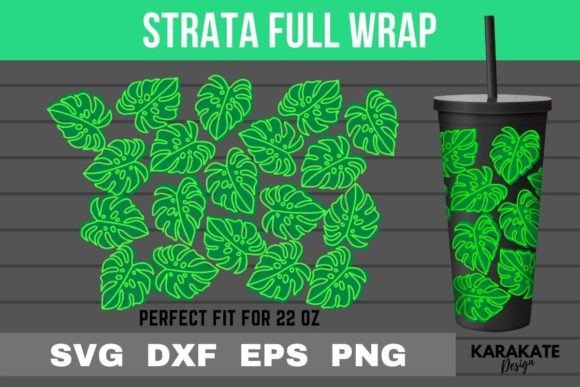
Monstera, 22 Oz Strata Cup Wrap SVG
A Designer’s First Glance: Clean, Confident, and Very “Now”
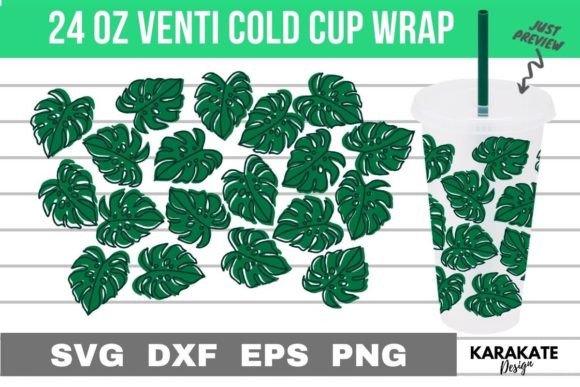
When I opened Monstera, 22 Oz Strata Cup Wrap SVG, my first thought wasn’t “Oh, another tropical motif.” It was, “This feels intentional.” The monstera leaf is bold but not overwhelming—its silhouette has graceful curves and open negative space that reads clearly even at a glance. There’s no fussy detailing or over-rendered veins; instead, it leans into confident line work and balanced proportions. That’s a huge win for embroidery. As a designer who’s stitched dozens of monstera variations, I can say this one avoids the common trap of trying to mimic botanical realism—and instead embraces graphic strength. It’s a machine embroidery design that breathes.
Where It Shines: Real Projects, Real Customers
Last week, I prepped a small batch of custom embroidered tote bags for a local boutique’s spring launch—and I used Monstera, 22 Oz Strata Cup Wrap SVG as the centerpiece on natural canvas. Why? Because it scaled beautifully across varied fabric textures without losing definition. On medium-weight cotton duck, the leaf held crisp edges in satin stitch; on slightly brushed organic cotton, the fill stitch settled smoothly with minimal puckering. I also tested it on a lightweight sweatshirt for a client’s baby shower gift set (think: embroidered onesie + matching burp cloth), and the clean outline translated well—even with lighter thread weight and reduced density settings.
This isn’t just a pretty graphic—it’s a handmade product enhancer. When customers see it on a linen tea towel or an unstructured cap, they don’t read “clip art.” They read “thoughtful,” “curated,” and “made with care.” That subtle shift matters—especially for Etsy sellers and small shop owners building brand trust. I’ve watched buyers linger longer on listings featuring this kind of intentional, uncluttered design. It signals professionalism without shouting.
What to Watch For: Fabric, Fit, and Function
That said, Monstera, 22 Oz Strata Cup Wrap SVG isn’t magic—it’s a tool. And like any tool, its success depends on context. On stretchy knits (like jersey baby onesies), I recommend testing with tear-away + cut-away stabilizer combo—especially around the leaf’s widest curve. Thin fabrics like voile or lightweight rayon need extra backing to prevent show-through in dense fill areas. And while the design works beautifully on dark fabric (I love it in deep forest green thread on charcoal cotton), avoid pairing it with overly busy prints underneath—the negative space needs room to land.
It’s also not ideal for tiny hoops under 4 inches. The leaf’s width demands breathing room; compressing it too far risks losing the elegant taper of the stem and blurring the tip’s point. If you’re planning a custom apparel run on curved surfaces—like structured caps or curved pillow covers—check how the wrap layout interacts with seam lines and fabric grain before stitching your first piece.
Design Assets That Earn Their Place
The included file suite—SVG, DXF, EPS, and high-res PNG with transparent background—is practical and versatile. As a designer who toggles between embroidery software, vector editors, and mockup tools daily, I appreciate having options. The SVG holds clean paths for resizing without degradation. The PNG lets me drop it instantly into printable mockups for client previews or Etsy listing visuals. And yes—I double-checked licensing before offering finished embroidered items for sale. Always do the same: confirm whether the digital embroidery file permits commercial use, especially if you’re selling physical products or bundling it into craft kits.
Practical Notes from My Embroidery Log
- Always test first—on scrap fabric matching your final project’s weight and stretch.
- Check thread colors against your base fabric in natural light—not just screen light. Monstera greens behave differently on oatmeal vs. navy.
- Review stitch density in your embroidery software. This design doesn’t need heavy fill—moderate density keeps it soft and wearable.
- Confirm hoop size compatibility early. If your machine maxes out at 5x7", verify the design fits comfortably within those bounds.
- Inspect small details: the leaf’s tip, inner curve, and stem junction. These are where running stitch or satin stitch transitions matter most.
- Try black-and-white mockups. If it reads strongly in grayscale, it’ll hold up across diverse fabric tones.
- Use proper stabilizer: medium-weight cut-away for stable wovens, hybrid for knits, and light tear-away for linens.
- Ask yourself: does this support your craft business goals? For personalized gifts or boutique branding, yes—it elevates perceived value. For mass-produced holiday embroidery, consider simplifying further.
Final Thought: Not Just a Leaf—A Design Decision
Monstera, 22 Oz Strata Cup Wrap SVG isn’t about chasing trends. It’s about choosing a design asset that works quietly but powerfully—on a nursery pillow cover, a coffee shop apron, or a wedding weekend tote. It’s the kind of embroidery file that makes customers pause, smile, and say, “Where did you get that?” That’s the mark of strong visual storytelling in handmade goods. Whether you’re an Etsy seller, a studio embroiderer, or a creative entrepreneur building a cohesive product line, this monstera delivers clarity, calm, and quiet confidence—exactly what thoughtful making requires.